Urbanites flee to suburbs, country in light of the pandemic
August 27, 2020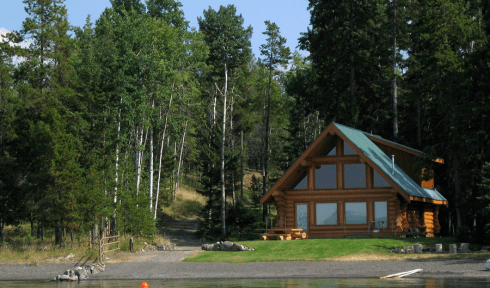
In this peculiar era of social/physical distancing and avoiding crowds, it should probably come as no surprise that many city-dwellers are thinking of chucking city life for either the suburbs or the country.
According to the Toronto Sun, “nearly three in five people say living in a rural area is more appealing to them now than before the pandemic,” and the same percentage “say the same thing about living in the suburbs.”
“I think it’s too early to predict if it’s going to be a long-term trend or not…but we have all been locked up in our houses during COVID-19 and have had a lot of time to sit around and evaluate what’s important to us and we’re starting to see that shift outside of the major urban centres,” states Sean Morrison, president of the Ontario Real Estate Association, in the Sun article.
The article goes on to point out that it’s not just about avoiding crowded cities – the “work from home” aspect of the pandemic has also made getting a larger yard and perhaps a bigger house more attractive.
Commenting on the similar trend south of the border, Zillow’s Chief Economist Joshua Clark says the pandemic is at play in other ways.
Speaking to Realty Biz News, Clark notes “it may be tempting to conclude that urban renters who have been cooped up without outdoor space and unable to visit their favorite local bar are ready to commit to suburban life, and that is likely true for many. But that narrative ignores the job loss that has hit renters, who are disproportionately employed in the industries most affected, and has likely played a bigger role in recent moves.”
So those who were renting in the city may now only be able to afford to rent somewhere farther from the downtown core, he explains.
The Simple Dollar blog looks at the core question of whether or not it is truly cheaper to live outside of a city in a suburb or rural setting. Buying a house, the blog reports, “can cost twice as much in the city versus the suburbs.” However, cities offer the best public transit, and groceries tend also to be cheaper downtown, the blog adds.
If you live far away from where you work, beware the perils of commuting, the blog warns.
“This means that if you are returning to your place of work from your home in the suburbs or a small town, you could be back to spending a great deal of time, money and stress sitting in traffic, which can take a toll on your health; Scientific American recently noted that long-distance commuters could suffer from physical maladies, including headaches and backaches, along with mental issues, ranging from sleep disturbance and fatigue to concentration issues,” the blog reports.
As one who has lived in the downtown of a major city, the suburbs, and in small towns in Ontario and Alberta, this writer can attest to the importance of the last point raised by Simple Dollar. A long commute to work – sometimes it can be hours each way – really takes it out of you. While most of us are working from home, that may not be the case forever – so think long-term if you are planning to move farther away from your place of work. If there’s a way to get to work without driving, that makes the suburban or rural property much more attractive.
You don’t have to travel to Kindersley, Sask. to open up a Saskatchewan Pension Plan account. Whether you’re downtown, flipping burgers in the ‘burbs or surveying your pasture, you can connect with SPP online to see if this plan is an option for you. Once you’re a member, you can use MySPP to track the balances of your retirement accounts – all from the comfort of home.
Join the Wealthcare Revolution – follow SPP on Facebook!
Written by Martin Biefer

Martin Biefer is Senior Pension Writer at Avery & Kerr Communications in Nepean, Ontario. A veteran reporter, editor and pension communicator, he’s now a freelancer. Interests include golf, line dancing and classic rock, and playing guitar. Got a story idea? Let Martin know via LinkedIn.
Aug 24: BEST FROM THE BLOGOSPHERE
August 24, 2020
Pandemic is causing 8 million Canucks to rethink retirement
There’s no question that 2020 has been a year like no other. Its effects on the economy and our finances have been profound.
A new study by Edward Jones and research company Age Wave, reported on by Global News, shows what impacts the pandemic has had on retirement savings in particular.
The report says a whopping eight million Canadians “are rethinking their retirement timing” due to the pandemic. While one of every 10 Canucks still plans to retire early, “one third believe they will retire later,” citing financial concerns, the Global article notes.
“If many working adults were not adequately prepared for retirement, COVID-19 has thrown them even farther off course,” the article notes.
The study found that two million Canadians “have stopped making regular savings to their retirement savings.” Before the pandemic, the research shows, 54 per cent of adults were confident about retirement. Now, that confidence indicator is down to 39 per cent, Global reports.
“Those who think they’ll have to postpone retirement cited needing more income, shrunken savings, investment losses and increased uncertainty about how much they’ll need in retirement,” the article says. “The few who are considering anticipating retirement amid the pandemic, on the other hand, said they `realized that they were looking forward to retirement, or they want to spend time doing other things that are more important to them than work,’” the article states.
The article quotes financial author Alexandra Macqueen as noting that those with workplace pension plans, notably defined benefit plans, aren’t as impacted by the pandemic and can still choose to retire early.
(Save with SPP interviewed Alexandra Macqueen recently, here’s a link to the interview)
“What I’m … thinking more and more is that the difference between people with pensions and without is getting so much more stark,” she says in the Global article.
The article notes that older Canadians (boomers and the cohort that is older than them, the “Silent Generation”) are generally doing fairly well during the pandemic, while younger generations (millennials, Gen Z, and Gen X) are struggling.
The older are helping the younger financially, the article concludes, while the younger generations are making sure their elders are staying health, a “silver lining” of intergenerational cooperation amidst the pandemic.
The article underlies the disparity between those who have a workplace pension and those who don’t. When you’re in a plan at work, pension contributions are deducted from your pay – the savings is automatic, a “set it and forget it” way to pay yourself first.
The pandemic will eventually end, but if you lack a workplace pension plan, you still can set up an automatic retirement saving system of your own.
The Saskatchewan Pension Plan lets you automate your retirement savings through pre-authorized transfers from your bank account. You can start small – an affordable contribution – and ramp it up when you’re making more in the future. If there’s a trick to retirement saving, it’s to start doing it and then keep on with it. Starting and stopping won’t get you there. Pay your future self first. The money you set aside today may be missed in the short term, but in the long run you’ll have more security for the future, post-work years.
Join the Wealthcare Revolution – follow SPP on Facebook!
Written by Martin Biefer
Martin Biefer is Senior Pension Writer at Avery & Kerr Communications in Nepean, Ontario. A veteran reporter, editor and pension communicator, he’s now a freelancer. Interests include golf, line dancing and classic rock, and playing guitar. Got a story idea? Let Martin know via LinkedIn.
About one-third of Canadians lack an emergency fund – here are some tips to get you started
August 20, 2020
According to a recent article in MoneySense nearly two-thirds of Canadians have built an emergency fund. That’s great, but means that one-third of us have not.
For those of us is in that bottom third, an emergency fund is designed to cover “unexpected expenses, such as urgent major repairs (not renovations) to your home or car, unexpected medical expenses not covered by universal healthcare or insurance, or lack of income due to job loss,” MoneySense explains.
As many of us are finding out during this bizarre year 2020, without an emergency fund, these unexpected expenses are being covered “with a credit card… payday loans, or heavily using your unsecured line of credit,” the article continues. All of these are high-interest options, and the interest piles up if you can’t pay the money back in full.
Some folks also raid their retirement savings to pay the bills, a strategy that can backfire at tax time or in the distant future when you’re trying to leave the workforce – more about that later.
MoneySense recommends we all set aside enough money to cover “three to six months’ worth of fixed expenses.” OK, so we know the what and the why – let’s turn to the how.
An emergency fund, the article suggests, should not be set up like a retirement savings account. “Saving for an emergency isn’t about long-term goals, increasing your wealth, or planning for retirement, it’s about having immediate access to cash,” the site advises.
MoneySense recommends that you first create a budget to see how much you can set aside each month. That amount should be invested in either a TFSA or a high-interest savings account, the article notes. “Disconnect the account from your debit card so you won’t spend it,” the article advises. Automate payments so you don’t “forget” to make them, MoneySense says. “Pay yourself first.”
At Manulife’s website, the advice is similar. An additional idea on how to build the emergency fund is to cut back on costs – “think about how much you spend on coffee, lunches out, and other impulse purchases. Give up one or two things and week and stash that money into your savings,” the site suggests.
They also reiterate the idea of making savings automatic – treat your emergency fund “like a bill… the sooner it’s saved, the less time you will have to spend it.” Manulife also warns against the dangers of analysis paralysis – start small, say $10 a week or so, and ratchet things up as you go along.
Sun Life covers much of the same ground, but warns against using debt as an emergency fund or tapping into retirement savings.
“All withdrawals from RRSPs (except for education and home purchases, under the Lifelong Learning Plan and the Home Buyers’ Plan, respectively) are subject to income tax and will result in the permanent loss of contribution room – that is, once you’ve taken it out, you can’t put it back in. Any withdrawals from your RRSP are immediately subject to withholding tax,” Sun Life explains.
“If you withdraw up to $5,000, the withholding tax rate is 10 per cent. If you withdraw between $5,001 and $15,000, the withholding tax rate is 20 per cent, and more than $15,000, the rate is 30 per cent. These tax rates apply in all provinces except Quebec, where provincial tax rates apply on top of the federal withholding tax,” the Sun Life article warns.
So to recap – create a savings account that isn’t hooked up to any of your cards, and automatically transfer money into it regularly. Keep the money in some sort of high-interest savings account so that it remains liquid, and ready to spend when an emergency arrives. You don’t want to risk losses here.
Think of it as an obligation, like a bill, that you have to pay each month. Then set it and forget it, until the next emergency comes along.
And if you’re busily automating your emergency fund savings, think about doing the same thing for your Saskatchewan Pension Plan retirement account. Have a pre-set amount earmarked for retirement automatically withdrawn from your bank account every payday. That way, just as is the case for a well-designed emergency fund, you’re paying your future self first.
Join the Wealthcare Revolution – follow SPP on Facebook!
Written by Martin Biefer
Martin Biefer is Senior Pension Writer at Avery & Kerr Communications in Nepean, Ontario. A veteran reporter, editor and pension communicator, he’s now a freelancer. Interests include golf, line dancing and classic rock, and playing guitar. Got a story idea? Let Martin know via LinkedIn.
Aug 17: BEST FROM THE BLOGOSPHERE
August 17, 2020Are Canadians getting sidetracked in their retirement savings efforts?
What’s something that you begin to think about for the first time in your 20s and 30s, and begin to worry about once you’re in your 60s?
No, it’s not growing old. According to new research from Franklin Templeton, reported upon in Wealth Professional, that multi-decade preoccupation is saving for retirement.
Franklin Templeton’s Retirement Income Strategies & Expectations (RISE) research found that 79 per cent of Canadians “believe someone should start saving for retirement by the time they’re 30 years old,” the magazine reports. But only about half of those surveyed – 41 per cent – said they did start saving at that age, Wealth Professional reports.
“Looking at the top three financial priorities reported by each participating age group, the survey showed that retirement saving is a top objective among those in their 30s, and it remains as a primary consideration for people up to their 60s,” the magazine explains.
So what’s getting in the way of retirement saving?
According to the survey, “one-third said they fell short because they had to prioritize debt repayment, and one-fourth blamed their shortfall on an unexpected life event or expense.”
Right up there with retirement saving as chief concerns – in all age groups – were “paying off unsecured debt” and “having sufficient savings to cover unexpected expenses,” the survey data shows.
So if Canadians generally aren’t able to save much for retirement, how do they think the golden years will work out?
Even though three-quarters of those surveyed were “confident” about retirement, 73 per cent expressed concern “about potentially outliving their savings,” and 48 per cent admit they have yet to develop a retirement plan.
Without plans or savings, it’s not surprising to learn that Canadians – 42 per cent – expect to have a “later than expected” retirement, Wealth Professional notes. What the magazine did find surprising was that retirees polled expressed “regret at not having saved more” (56 per cent) and noted their expenses had actually gone up in retirement (61 per cent).
The Cole’s Notes version of this is quite simple. We all think we should start saving regularly while we’re young, but then find we can’t or don’t. And when we’re older, we regret that decision. So why not make saving the new “not saving?”
Like any big project, saving for retirement can sound intimidating. Who can suddenly put some high percentage of take-home income away in a retirement savings account? A trick that works is to start small. Can you afford to save $5 a week? Start there. Down the road, when you can, increase it, maybe to $10. Be sure that your savings are automatically withdrawn from your bank account so you don’t accidentally crack into the money. Make it automatic, keep increasing the contributions, and over time, savings will start to pile up. You can use an automated approach with the Saskatchewan Pension Plan.
You can also set up your SPP account in the “bill payments” area of your bank account, and then transfer any cash left over following bill payments to your plan. SPP will quietly and efficiently grow your money over time, and when it’s time to hit the parachute and escape from work, your SPP pension will be ready to provide you income for life via a choice of annuity options. Be sure to check them out today!
Join the Wealthcare Revolution – follow SPP on Facebook!
Written by Martin Biefer
Martin Biefer is Senior Pension Writer at Avery & Kerr Communications in Nepean, Ontario. A veteran reporter, editor and pension communicator, he’s now a freelancer. Interests include golf, line dancing and classic rock, and playing guitar. Got a story idea? Let Martin know via LinkedIn.
Aug 10: BEST FROM THE BLOGOSPHERE
August 10, 2020Some tips to get your retirement plan back on track
While markets have gradually recovered from a brutal spring, some folks who were on track to retire may be thinking about staying on the job – or going back.
The Motley Fool blog offers some tips on how to get your retirement back on track, without necessarily having to go back to your old job.
“Rejoining the workforce is one option, but it doesn’t appeal to everyone,” the blog explains. “Those at a higher risk for COVID-19 may not feel comfortable exposing themselves to others who may have the illness, and even retirees who want to work may not be able to find a job with so many businesses shuttered or closed for good,” the Motley Fool adds.
If you’re retired, and your savings have been negatively impacted, try to cut back on spending, the blog advises.
“Limit the amount you spend on dining out, entertainment, and travel. Ask yourself before every purchase whether you actually need to buy that item or if you just want it,” the blog advises. Other money-saving tips include using reward points and cash-back options, taking advantage of sales, and making use of senior discounts, the blog notes.
An additional tip is to “rethink your plans for retirement.”
“Consider shortening or skipping planned vacations and avoid big-ticket purchases unless they’re absolutely necessary. Retirement will be less expensive without these costly purchases in your budget, and you can use the money you were planning to spend on trips to cover your basic expenses,” the Motley Fool suggests.
If you don’t (or can’t) go back to your old job, consider a “side hustle that doesn’t require a lot of work,” the blog states.
Rent out a spare room, or a parking spot. See if you can walk neighbour’s dogs for a few bucks. Become a house-sitter. “Think about what skills you possess or what jobs you might like to do and how to market yourself. Word of mouth and social media can be a good starting point,” the blog notes.
The last tranche of advice is aimed at American readers, but basically, the idea is to see if you qualify for any retirement benefits from the government. A drop in your income from your retirement savings might mean an increase in benefits like Old Age Security (OAS), which can be “clawed back” for higher-income earners.
“When you’re living on a fixed income, every dollar matters. These strategies may not all appeal to you, but try the ones that do to see what difference they can make,” the blog concludes.
One of the great features of the Saskatchewan Pension Plan is the fact that you can receive a lifetime pension via an annuity. The plan has several annuity options you can choose from. While many Canadian retirees worry about living on income from fluctuating investments, an annuity means you’ll get the same payment every month for as long as you live, regardless of whether the markets go up or down. And you can choose an annuity that provides security for your beneficiaries as well. It’s just another way SPP builds security into your retirement.
Join the Wealthcare Revolution – follow SPP on Facebook!
Written by Martin Biefer
Martin Biefer is Senior Pension Writer at Avery & Kerr Communications in Nepean, Ontario. A veteran reporter, editor and pension communicator, he’s now a freelancer. Interests include golf, line dancing and classic rock, and playing guitar. Got a story idea? Let Martin know via LinkedIn.
Dreams can be realized if you put the work in, book suggests
August 6, 2020
A glance at the title on the Indigo website – How to Retire Debt-Free & Wealthy – made this writer decide to add Christine Ibbotson’s book to our retirement library. What else, after all, could anyone want from their retirement? What’s great about this book is that it illustrates the path you need to take to get there, and uses dozens of different anecdotal/testimonial trails to illustrate the key points.
Ibbotson starts by noting that “very few clients (she is a licensed financial and investment advisor, estate planner and tax specialist) entering retirement will want to compromise their current lifestyles, but will find it difficult to live on less income, especially if they still have a mortgage or outstanding debt.”
That’s seminal retirement advice, and the book builds on it.
A key part of the book is her five-step methodology to establishing what she calls “your core plan.” Step one is debt elimination, she writes. No easy way out – the best step is to target one of your debts with extra payments, pay it off, and then go after the others. “Once all the debt is paid, you can use these new-found funds to start a savings program towards investing,” she says.
The second idea is one we’ve not seen before, specifically the idea that your “mortgage amortization should match the years left to your retirement.”
“If you are now 45, the amortization on your mortgage should be 20 years,” she explains. Why this idea is so smart is that it basically guarantees you will retire without a mortgage, which is usually the largest debt we Canadians carry. Carrying a mortgage when you have less money (because you are retired) is not always a lot of fun.
Other ideas in the five-step plan are to set up a daily cash journal and track all expenses (so you know where every nickel of your money is going), determining your total debt-servicing ratio, and to “explore ways to increase your wealth” once debt is out of the picture.
In one of the many examples in the book, 50-somethings “Tracie and Kyle” are able to get out of a debt quagmire by tracking and then dramatically slashing their discretionary spending, enabling them to live on one salary. Then, both added side gigs, their debts were addressed and eliminated, and their turnaround resulted in an education plan for the kids and retirement savings for themselves.
The experience turned great spenders “into great savers,” the book declares.
For those who can’t imagine becoming savers, the book has a chapter just for you on “Ways to Save Every Day.” Do your own house cleaning and cut your own lawn. Do small repairs yourself. Cut back on phone and cable. Bundle services where you can. Buy second hand. Drive your car longer. Cut back on expensive memberships. Buy generic brands. Buy in bulk, and shop when there are sales. There are many more tips like these in this well-thought-out volume.
There’s even advice on the tricky problem of making your money last in retirement. Ibbotson suggests when you are retired, there will be a “honeymoon phase” for the first five years of retirement, followed by the middle age of retirement (years six to 20) and the “long-term” phase, 20 years and beyond.
Use your unregistered savings for the first phase as much as you can. Start tapping into RRSPs, pensions, and government benefits in phase two. By phase three you will need income from your RRIFs and fixed-income investments, which you will have been “laddering” in phases one and two.
This great little book is well worth adding to your collection. If, like the book suggests, you are banking on retiring more than 20 years from now, it’s probably well past time to start putting away money for retirement. The Saskatchewan Pension Plan offers you a choice of a Balanced Fund or Diversified Income Fund for your contributions. Be sure to check out SPP today!
Join the Wealthcare Revolution – follow SPP on Facebook!
Written by Martin Biefer
Martin Biefer is Senior Pension Writer at Avery & Kerr Communications in Nepean, Ontario. A veteran reporter, editor and pension communicator, he’s now a freelancer. Interests include golf, line dancing and classic rock, and playing guitar. Got a story idea? Let Martin know via LinkedIn.
Retiring later means more experience and skills stay in the workforce: Prof. Donna Wilson
July 30, 2020
A wide-reaching report by University of Alberta Professor Donna Wilson reveals some compelling facts about retirement – including the idea that working to or even beyond traditional retirement age may make sense for many of us.
Reached by Save with SPP in Edmonton, Prof. Wilson, who teaches in the Faculty of Nursing, says the “whole idea of Freedom 55, and that wonderful retirement with big vacations, is a fantasy.”
“The reality of retirement is quite different,” she explains. Sixty-four is the median age of retirement in 2020. “A year ago, it was 63, the year before it was 62, and the year before that it was 61,” she notes. “This is a massive shift – more and more people are not retiring early, and that fact is not widely recognized.”
Many are working longer because they simply lack the retirement savings or workplace pensions to be able to afford to retire, she explains. Prof. Wilson points to European studies that see a lot of people still on the job there to age 68, 69, or even 70.
“In Europe, they have worker shortages and an aging population – open jobs that can’t be filled,” she notes. Yet, often “highly qualified people” are lured into retirement because of the terms of their workplace pension plans, and are leaving work when they still have a lot to offer.
“Many pensions are based on age and years of service, such as the 85 factor. When you hit that factor, many people say `I’m outta here,’” she explains.
Prof. Wilson says Canada should seriously look at modernizing its retirement systems to align better with the reality of people wanting to work or needing to work later.
Early retirees can find they are barely making ends meet in retirement, and “a lot end up going back to work. Finances are a huge part of it but many are not prepared to be cut off from their jobs and the people they work with,” she says.
The current pandemic crisis may offer some of us “a taste of what it (retirement) could be like,” she says. “You are stuck at home, you are lonely and bored, you’d love a nice trip overseas but you can’t go.”
Prof. Wilson says that with age 64 being the current median retirement age, it means half retire before that age and the rest after it. While it’s true that some folks may have health problems and truly need to retire at a younger age, most others don’t. What can be done to keep their experience and skills in the workforce?
The professor has spent time working in Ireland, which – like Alberta – has had a boom and bust cycle in its economy. When the economy is booming, “immigration is up, there are lots of jobs, housing prices rise – and then there’s a crash, and no jobs.”
Her Irish experience found that there are many “practical, concrete things” managers can do to retain older workers, most rooted in more open communication.
“When an employee is 55 or 60, and it is time for their annual review, the boss should say `we hope you don’t think you should retire,’” so the employee feels valued and needed, the professor points out.
Similarly, “if someone becomes a grandparent, they often retire to spend more time with that grandchild. Why couldn’t the boss say `wow, how nice, do you need to work half time or do you want a few weeks off to help with the new baby?’” By being accommodating about older workers’ needs to take care of grandchildren, but maybe also ill spouses or parents, managers could offer reduced hours and leaves, Prof. Wilson explains.
HR departments, she adds, ought to consider offering health and wellness programs to help retain older workers. “There’s a lot more (employers) can do to be more proactive, and positive about older people to avoid the ingrained ageism that is out there,” she says.
Ageism is a two-faceted problem, Prof. Wilson explains. First, younger people can treat their elders with a sort of disdain, assuming they can’t hear as well, see as well, or work as hard. And, worse, there’s “self-ageism,” where older folks tend to sell themselves short.
Ageism is a myth. Recalling the old Participaction commercials from years ago, Prof. Wilson notes that a 60-year-old today could be in much better physical shape than someone half their age.
We thank Prof. Wilson for taking the time to talk with Save with SPP. Here’s a link to her research.
Flexibility is important with any retirement savings program. If you plan to work later than age 65, the Saskatchewan Pension Plan allows you to delay the start of your retirement to age 71. At that point, you’ll be able to choose from a variety of income options. Be sure to check out SPP today.
Join the Wealthcare Revolution – follow SPP on Facebook!
Written by Martin Biefer
Martin Biefer is Senior Pension Writer at Avery & Kerr Communications in Nepean, Ontario. A veteran reporter, editor and pension communicator, he’s now a freelancer. Interests include golf, line dancing and classic rock, and playing guitar. Got a story idea? Let Martin know via LinkedIn.
JUL 27: BEST FROM THE BLOGOSPHERE
July 27, 2020“Life without savings “difficult, but not impossible,” experts say
Like many things in life, such as quitting smoking or losing weight, saving for retirement – even though it is good for us – is often difficult to do.
Jobs aren’t as plentiful these days, household debt is at record highs, and there just isn’t always a lot of cash for putting aside long term.
But what kind of retirement will people who can’t or didn’t save face when they’re older?
According to a recent article in MoneySense, life without retirement savings (or a workplace plan) is “difficult, but not impossible.”
Canadians who have worked and paid into the Canada Pension Plan (CPP) can, in 2020, expect a maximum annual pension of “$1,176 per month – that’s $14,112 per year,” the article notes. However, the writers warn, not all of us will have worked long enough (and made enough contributions) to get the maximum.
“The average CPP retirement pension recipient currently receives $697 per month, or $8,359 per year. That’s only about 59 per cent of the maximum,” reports MoneySense.
You can start getting CPP as early as 60 or as late as 70, and the longer you wait, the more you get, the article notes.
All Canadian residents – even those who don’t qualify for CPP – can qualify for Old Age Security (OAS). If you don’t remember paying into OAS, don’t worry – you didn’t directly pay for it via contributions. Instead, the OAS is paid from general tax revenues.
“A lifetime or long-time Canadian resident may receive up to $614 per month at age 65 as of the third quarter of 2020, which is $7,362 annualized. OAS is adjusted quarterly based on inflation,” MoneySense reports.
There’s another government program that’s beneficial for lower-income retirees, MoneySense notes. The Guaranteed Income Supplement (GIS) “is a tax-free monthly benefit payable to OAS pensioners with low incomes. Single retirees whose incomes are below $18,600 excluding OAS may receive up to $916 per month, or $10,997 per year, as of the third quarter of 2020.”
What’s the bottom line? Someone qualifying for any or all of these programs can receive up to $23,721 per year, with “little to no tax required” per the rules of your province or territory.
The article notes that those saving $10,000 before retirement could add $25 to $33 a month to that total. Those saving $50,000 could see an additional $125 to $167 a month, and those putting away $100,000 will have $250 to $330 more per month.
The takeaway from all of this is quite simple – if you are expecting a generous retirement from CPP, OAS, and GIS, you may be in for a surprise. It’s not going to be a huge amount of income, but it’s a reasonable base.
If you’re eligible for any sort of retirement benefit from work, sign up. You won’t miss the money deducted from your pay after a while and your savings will quietly grow.
If there is no retirement program at work, set up your own using the Saskatchewan Pension Plan. Start small, with contributions you can afford. Dial up your contributions every time you get a raise. With this “set it and forget it” approach, you’ll have your own retirement income to bolster that provided by government, which will give you a little more security in life after work.
Join the Wealthcare Revolution – follow SPP on Facebook!
Written by Martin Biefer
Martin Biefer is Senior Pension Writer at Avery & Kerr Communications in Nepean, Ontario. A veteran reporter, editor and pension communicator, he’s now a freelancer. Interests include golf, line dancing and classic rock, and playing guitar. Got a story idea? Let Martin know via LinkedIn.
What are the best ways to teach your kids about saving?
July 23, 2020
Many of us boomers were good at ignoring the great financial advice given to us by our more successful parents. That meant we had to learn about personal finance in the School of Hard Knocks, and may explain why most of us now owe $1.70 for every dollar we earn.
Great steps are being taken to ensure the upcoming set of young Canadians get schooled a bit about money; CNN recently reported on Ontario’s plans for financial literacy classes in the primary grades.
Save with SPP had a look around the “information highway” for some thoughts on what the top things we parents should be tell our kids and grandkids about managing money. The folks at the Homeownership.ca blog offers a few tips from noted financial author Gordon Pape. First, Pape tells the blog, talk about money, and be open about it with the kids. Why let them grow up “in a world of ignorance” when you can instead honestly answer their money questions? The second tip is to avoid trying to teach them things you don’t know about, and to make the learning fun – make it more of a game.
Yahoo! Finance Canada adds a few more ideas. “Encourage teens to get jobs and earn money,” the site advises. “Help your children open a bank account. Show your kids how to map out a budget.” Other ideas here include using a glass jar as a piggy bank, so the young ones can see their savings grow, and talking to kids about how credit cards work.
The federal government has some ideas to share about money also (no snickering). Lead by example and use your own credit wisely, the site suggests. “If your teens see you using credit wisely, they may be more likely to follow your example,” the site adds. The key messages for younger credit users is that credit is not income – it is borrowed money that has to eventually be paid back. As well, the site notes, “if they repay the full amount they spent each month, they won’t need to pay interest.”
These last points are key, and something many of us either don’t know or don’t really want to hear. A line of credit or a credit card is a convenient way of borrowing money from a lender. While you can access money from these sources just as you would from a bank account – you can tap to pay, you can pull bills out of a machine – what is less visible is the cost of that borrowing.
Years ago, the federal government mandated credit card companies to show how many years it would take to pay off a credit card if you pay only the minimum amount. That’s another good thing to show the younger set!
If you are teaching your kids about saving, and they are old enough to start a retirement savings account, a nice option is the Saskatchewan Pension Plan. Younger people have a huge savings advantage – they may be 40 or more years away from retirement. That’s four decades for every invested dollar to grow. So starting young on retirement savings will pay off generously farther down the line.
Join the Wealthcare Revolution – follow SPP on Facebook!
Written by Martin Biefer
Martin Biefer is Senior Pension Writer at Avery & Kerr Communications in Nepean, Ontario. A veteran reporter, editor and pension communicator, he’s now a freelancer. Interests include golf, line dancing and classic rock, and playing guitar. Got a story idea? Let Martin know via LinkedIn.
JUL 20: BEST FROM THE BLOGOSPHERE
July 20, 2020Canucks doing better than we think at retirement saving: report
It’s somewhat rare to see a headline saying Canadians are on track for retirement saving, but that’s the key point of new research from HEC Montreal’s Retirement and Savings Institute.
The study, funded by the Global Risk Institute, was featured in a recent Benefits Canada article.
The positive news – “more than 80 per cent of Canadians aged 25 to 64 are prepared for retirement and the vast majority have a high probability of being prepared,” the magazine notes.
According to the research, which was conducted featuring a large sample of more than 17,000 Canadians, those who are the best prepared are those whose household earnings are below the national median, and “those covered by pension plans,” Benefits Canada notes.
Those who are in the worst shape – somewhat surprisingly – are “upper-middle earners without retirement savings,” the magazine reports, adding that CPP and QPP improvements may benefit that segment of the population down the road.
The authors of the study used what they called a “new stochastic retirement income calculator,” which unlike many calculators, models “the evolution of private savings, accounting for individual and aggregate risk; taxation of savings, including capital gains; employer pensions; a realistic stochastic modelling of work income; the value of housing; and debt dynamics.”
So for those, like us, who got lost at “stochastic,” it seems that this calculation takes into account risk, taxation, future work income, housing prices and levels of debt when calculating what one actually needs to maintain the same standard of living in the life after work.
That calculation showed that on average, participants would have 104.6 per cent of the net income they need, once they are retired, to maintain their pre-retirement living costs.
We can share a personal experience here. When the head of our household decided to get an estimate of what her pension from work would be, she was at first a little dismayed to see that the gross annual pension income – despite 35 years of membership in her workplace plan – was lower than what she was making at work. But when she looked at the net, after-tax income, or take-home pay, it was actually higher. It’s because she’s paying less income tax, no longer making pension contributions, and no longer paying into CPP and EI. That all makes a big difference on the bottom line.
So, the authors of the study conclude, “on average, if (Canadians) retire at the age they intend to, maintain their saving and debt payment strategies and convert all of their financial wealth into income, Canadians have net income in retirement which is higher than their pre-retirement income.”
The reason for the high numbers may be that for those making at or below the median income “are well covered by the public system even if they have no savings or [registered pension plan] coverage,” the authors of the report state in the Benefits Canada piece. It’s those with income above the median and who also lack workplace pensions – about 15 per cent of Canadians – who need to worry, the article concludes.
If you don’t have a retirement program through work, and don’t really want to take on saving and investing on your own, an excellent option is the Saskatchewan Pension Plan. The plan will invest your contributions at a very low investment cost, thanks to the fact the SPP is not operated on a “for profit” basis. Since its inception in the late 1980s the SPP has grown the savings of its members at an average annual rate of eight per cent. And when the time come for you to convert those savings into a lifetime income, the SPP has flexible annuity options to turn your hard-saved dollars into a lifetime income stream.
Join the Wealthcare Revolution – follow SPP on Facebook!
Written by Martin Biefer
Martin Biefer is Senior Pension Writer at Avery & Kerr Communications in Nepean, Ontario. A veteran reporter, editor and pension communicator, he’s now a freelancer. Interests include golf, line dancing and classic rock, and playing guitar. Got a story idea? Let Martin know via LinkedIn.