The Wealthy Barber 2025
Apr. 16: The Wealthy Barber 2025 Edition
April 16, 2026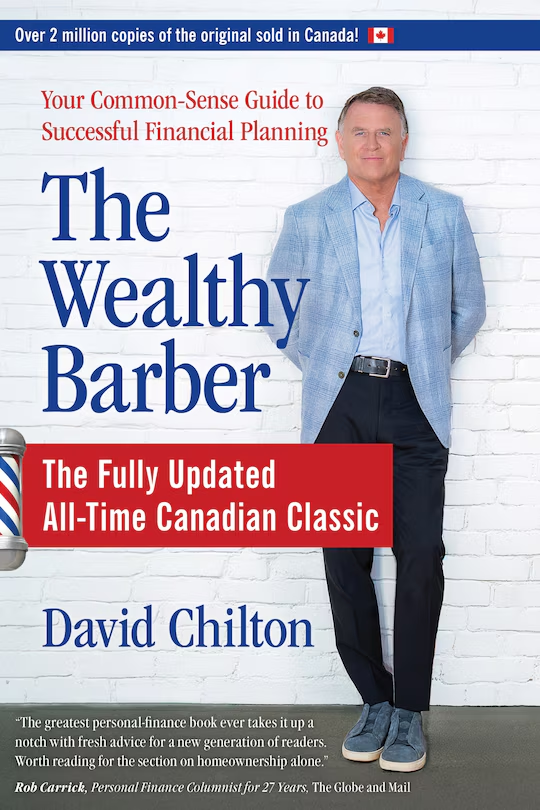
Engaging book delivers financial literacy in clear, enjoyable lessons: The Wealthy Barber (2025)
In this latest update of The Wealthy Barber, author David Chilton has a brother, sister, and their friends – all in their 20s and 30s — learning the ropes of personal finance from the famed Roy Miller, aka The Wealthy Barber.
Despite the surprising twist of everyone in the book being fans of both the Detroit Tigers and Lions, the friends learn key lessons about life and finance in a series of group sessions with Roy.
Roy, the book explains, was forced to drop out of university to look after his mom and siblings, and took over the family barber shop in Sarnia. A lesson he himself learned was to pay attention to successful people, and to learn from them the tricks of living within one’s means while saving for the future. He was happy to pass on his knowledge to a younger generation, including Matt, sister Jess, and friends Kyle and Sourov.
Roy starts off by telling the group “you can do this,” writes Chilton. “There is absolutely nothing we’re going to cover that you’re not capable of fully understanding and implementing successfully. You can start managing your money very well quite soon.”
His first bit of advice, the book continues, is about “the golden rule: invest at least 10 per cent of all you make for long-term growth. If you follow that one simple instruction… someday you’ll be quite well to do.”
Roy also tells the group about “the magic” of compounding, noting that “when your returns build up and earn returns and then all that together earns returns… et cetera, et cetera,” that’s “where the magic happens.”
Saving, he tells the group, is crucial for most of us. “Unless you come from a very wealthy family or marry into one – both excellent strategies by the way – you’re going to have to save money. You’re going to have to spend less than you make. You’re going to have to live within your means,” the book continues.
As well, Roy explains, “the only way to save…(is) to pay yourself first,” the book notes. “The most effective approach is to have the money come right off your paycheque, or directly out of your bank account, before you have a chance to spend it.”
Asked why savings should be invested, rather than being left “under a mattress,” Roy explains to the group that their savings are like a snowball at the top of a hill… “we invest to get it rolling… to harness the power of compounding returns.” Your savings, like the snowball, get larger as they roll along, he notes.
Roy says that even those without any investment knowledge can do well by investing in index funds (such as exchange traded funds). Instead of trying to pick stocks, which Roy likens to finding needles in a haystack, “we’re going to buy the whole haystack. The whole market, or at least, all the big companies.”
He warns the young (future) investors to be careful about fees, as even a seemingly small two per cent charge can eat into the growth of your investments.
A later chapter points out the importance of starting earlier in life on the savings path. There’s a detailed section of the difference between saving in a registered retirement savings plan (where assets grow tax-free and aren’t taxed until withdrawn) and a Tax Free Savings Account (where after-tax money can be saved and withdrawn tax free).
On joining workplace pension plans, Roy says that many such programs offer matching contribution by employers. Roy tells Matt, a teacher, that he has “a tremendous benefit at work that the rest of us here aren’t blessed with — a wonderful pension plan.” A defined benefit pension plan, the book explains, can provide members with pensions that pay out “60 per cent or more of their last working year’s income!”
The book discusses the other workplace pension options out there, such as defined contribution plans and group RRSPs as being easy ways to save automatically for your post-work future, and how programs like the First Home Savings Account and Home Buyers’ Plan can help you buy a home.
Other ideas Roy Miller shares with the group:
- Buying a smaller house means you will have a smaller mortgage that you can pay off more quickly.
- Be careful with credit cards and lines of credit – “debt doesn’t just offset growing assets, it often becomes so expensive to service that future saving is squeezed out.”
- If you are having problems living within your means, find a way to make more money – such as getting a promotion or a second part-time job.
Roy’s final advice to his students “is simply this. Fancy tax shelters, far-out-of-the-money option contracts and meme stocks all make for great conversations at dinner parties. Forced saving, owning the thing that own the things and compounding returns simply make for great dinner parties.”
This is beautifully written, entertaining and engaging book that takes the mystery out of being in charge of your finances.
If you don’t have a workplace pension program to join, then the Saskatchewan Pension Plan may be just what you’ve been looking for. You decide how much to contribute – you can have an amount directly transferred to the plan from your bank account on payday, or make lump sum contributions, or transfers in from other RRSPs you have – and SPP does the heavy lifting for you.
SPP will invest your hard-saved loonies in our professionally managed, low fee pooled fund. When it’s time to retire, your options include the security of a monthly lifetime annuity payment or the more flexible Variable Benefit.
Check out SPP today!
Join the Wealthcare Revolution – follow SPP on Facebook!
Written by Martin Biefer

Martin Biefer is Senior Pension Writer at Avery & Kerr Communications in Nepean, Ontario. A veteran reporter, editor and pension communicator, he’s now a freelancer. Interests include golf, line dancing and classic rock, and playing guitar. Got a story idea? Let Martin know via LinkedIn.